

Language Quality Assurance for iGaming Operators
July 29, 2026
KYC Verification Process for US Online Casinos: What Operators Must Know
July 31, 2026For licensed casinos and sportsbooks, the best help desk software shortlist comes down to three paths: an enterprise-grade AI-first platform (Zendesk or ServiceNow) for operators with dedicated admin capacity, a mid-market platform with faster time-to-value (Freshdesk or Help Scout), or managed outsourced player support through Workanova when SLA compliance, KYC/payments handling, or rapid scaling make in-house delivery a liability.
The rule of thumb: if you can staff a platform admin, budget for AI feature tiers, and integrate your payments and KYC stack yourself, pick software. If any of those three conditions is uncertain, outsourcing is the faster, lower-risk path.
Key shortlist signals for iGaming:
- Enterprise AI-first platforms: Zendesk, ServiceNow — deep workflow customization, SOC 2 certified, PCI scope awareness required
- Mid-market platforms: Freshdesk (Freshworks), Intercom, Gladly, Help Scout — faster setup, strong omnichannel, AI capabilities vary by tier
- Managed outsourced support: Workanova — 24/7 multilingual coverage in 14+ languages, KYC/payments handling, dedicated teams live in weeks, strict SLAs
Help desk platforms consolidate tickets from live chat, email, and social into one interface, with AI-first platforms in 2026 adding autonomous resolution, sentiment analysis, and intelligent triage as core capabilities, not optional add-ons.
Table of Contents
- What’s the best help desk software for iGaming player support?
- How do you choose the right platform for a licensed casino or sportsbook?
- What does “AI-first” actually mean for player support in 2026?
- What compliance and integration requirements apply to US iGaming operators?
- What does implementation actually cost and how long does it take?
- What should your vendor demo script include?
- When software isn’t the right path: Workanova as a managed alternative
- Key Takeaways
- The gap between what help desk software promises and what iGaming actually needs
- Sources and vendor links for further evaluation
What’s the best help desk software for iGaming player support?
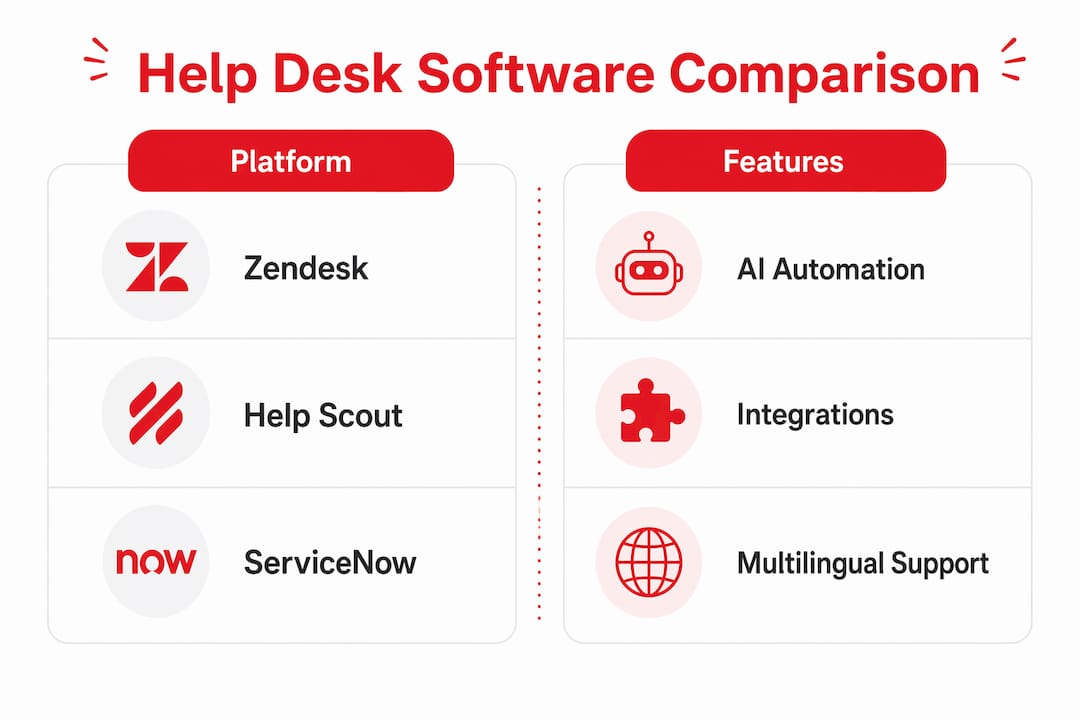
| Platform | Channels | AI / Automation | Integrations | Multilingual | Scalability | SLA / Enterprise | Security | Pricing Shape | Implementation | Best For |
|---|---|---|---|---|---|---|---|---|---|---|
| Zendesk | Chat, email, phone, SMS, social | Advanced AI agents, auto-resolution, sentiment analysis | apps, payments, KYC via API | Yes, multi-language KB | High | Full SLA, roles, audit trails | SOC 2, encryption | Per-agent, AI features in higher tiers | Weeks to months | Enterprise omnichannel |
| ServiceNow | Chat, email, phone, social | Workflow AI, intelligent triage | Deep API, CRM, HR, payments | Yes | Enterprise-grade | Full ITSM governance | SOC 2, ISO | Enterprise contract | Months | Large-scale ops |
| Freshdesk | Chat, email, phone, social | Freddy AI, suggested replies, auto-routing | integrations, CRM, payments | Yes | Mid-to-high | SLA policies, escalation rules | SOC 2 | Per-agent, free tier available | Days to weeks | Mid-market, fast setup |
| Intercom (Fin) | Chat, email, social | Fin AI agent, autonomous resolution | CRM, payments, API | Yes | High | SLA, roles | SOC 2 | Per-seat + usage | Days | AI-first chat automation |
| Gladly | Chat, email, phone, SMS, social | AI suggestions, task automation | CRM, loyalty, payments | Yes | High | SLA, conversation threading | SOC 2 | Per-agent | Weeks | VIP and retention flows |
| Help Scout | Chat, email | AI Summarize, AI Assist, no-code workflows | CRM, Zapier, API | Limited | Mid | Basic SLA | SOC 2 | Per-user, affordable | Under 1 day | Smaller teams, simplicity |
Pro Tip: During any enterprise demo, ask the sales engineer to show you AI features live in a sandbox with synthetic tickets. Vendors frequently demo AI on curated scenarios. Ask specifically: “Show me how the AI handles a KYC failure ticket and a chargeback inquiry.” If they can’t demo it in real time, that capability isn’t production-ready.

How do you choose the right platform for a licensed casino or sportsbook?
Eight criteria separate a viable platform from a costly mistake in regulated iGaming.
- AI and automation maturity. AI should handle routine inquiries autonomously, freeing agents for VIP escalations. Confirm which AI features are included in your quoted tier — advanced AI capabilities are frequently gated behind enterprise pricing.
- Omnichannel coverage. Chat-first routing is non-negotiable for player support. Verify that live chat, email, SMS, and social all feed a single queue with unified player history.
- Payments and KYC integrations. Your platform must connect to your payment gateway and KYC/identity provider. Shallow integrations mean agents handle sensitive data manually, expanding your PCI scope.
- Multilingual and 24/7 staffing. A platform that supports 14 languages is worthless without agents who speak them. Evaluate whether the software supports your staffing model or whether you need a managed partner.
- SLA, roles, and audit trails. Licensed operators need documented SLA adherence, role-based access, and full audit trails for regulatory review.
- Security certifications. SOC 2 Type II is the baseline. Confirm encryption at rest and in transit, data residency options, and how the platform affects your PCI scope.
- Total cost of ownership. Base pricing rarely reflects real TCO. AI tiers, integration engineering, professional services, and per-seat costs compound quickly.
- Implementation and admin effort. Feature-rich platforms often require dedicated administrators. Factor internal headcount into your build-vs.-buy decision.
Questions to ask every vendor:
- Which AI features are included at the tier you’ve quoted us?
- Can you show a live integration with a payments gateway or KYC provider in a sandbox?
- Where is our data stored, and can we specify a US data residency?
- What is your published uptime SLA, and what are the remedies for breach?
- How do you handle peak traffic — jackpot drops, major sports events — without degraded response times?
- What audit trail data is available for regulatory review?
- How long does a full integration with a custom game platform API typically take?
- What admin headcount do your enterprise customers typically dedicate to platform management?
Pro Tip: Red flag: if a vendor’s product sheet lists “AI-powered triage” but the sales engineer can’t show it in your tier’s sandbox, that feature is an upsell. Ask for a written confirmation of which AI capabilities are included at your contract level before signing.
What does “AI-first” actually mean for player support in 2026?
Analysts describe 2026 as the inflection point where AI moves from a bolt-on feature to the operating core of service platforms. For iGaming, that means four specific capabilities matter.
- Autonomous resolution: The platform resolves low-risk tickets (password resets, bonus balance queries) without agent involvement.
- Sentiment analysis: Real-time detection of frustrated or at-risk players, triggering escalation to retention agents.
- Intelligent triage: Tickets routed by content, language, and urgency rather than round-robin assignment.
- Suggested replies: AI drafts responses for agents to approve, cutting average handle time on standard inquiries.
To validate these claims during a proof-of-concept, run this test sequence:
- Submit a synthetic KYC failure ticket and measure whether the AI routes it correctly or misclassifies it.
- Submit a chargeback inquiry with masked card data and verify the AI doesn’t attempt to surface real payment details.
- Trigger a sentiment-negative ticket (e.g., a player expressing frustration about a withdrawal delay) and confirm the escalation workflow fires.
- Run a simulated chat surge with 50 concurrent synthetic sessions and measure queue depth and response time.
- Test multilingual routing by submitting tickets in Spanish, German, and Portuguese and verifying correct language assignment.
Pro Tip: Build a library of 20–30 synthetic tickets covering your most common iGaming edge cases before any vendor demo. Use masked or fictional player data. This lets you run identical scenarios across all vendors and score them on the same rubric.
What compliance and integration requirements apply to US iGaming operators?
“Vendors with transparent SLAs and certification documents reduce procurement and compliance friction for regulated operators. Request SOC 2 Type II reports, penetration test summaries, and enterprise reference contacts before shortlisting any platform.” — PCMag help desk evaluation guidance
Essential integrations for US-licensed operators:
- Payment gateways: Direct integration prevents agents from handling raw card data in tickets, which is the primary PCI scope risk in help desk deployments.
- KYC/identity providers: Automated status lookups let agents verify player identity without accessing raw ID documents through the ticketing interface.
- Player account systems and game platform APIs: Real-time account data in the ticket view eliminates manual lookups and reduces handle time.
- CRM and loyalty systems: Agents need player lifetime value and VIP tier data visible in the ticket to make retention decisions in real time.
For support for iGaming licensing companies, compliance documentation from your help desk vendor is part of your regulatory file. Confirm data residency (US-based storage for US-licensed operations), encryption standards, and whether the platform has been independently audited.
What does implementation actually cost and how long does it take?
Simple platforms like Help Scout can be operational in under a day. Enterprise platforms like Zendesk and ServiceNow typically require weeks to months depending on workflow complexity, data migration, and API integrations.
| Cost Category | What Drives It |
|---|---|
| Licensing | Per-agent seats, AI feature tier, channel add-ons |
| Integration engineering | Payments, KYC, game platform API, CRM connectors |
| Professional services | Vendor onboarding, workflow configuration, training |
| Operational seats | Multilingual agents, VIP team, QA staff |
| Ongoing admin | Platform owner headcount, workflow maintenance |
Go-live milestone checklist:
- Finalize channel requirements and integration map (Week 1)
- Complete vendor security review and SOC 2 documentation (Week 1–2)
- Configure core workflows, SLA policies, and routing rules (Week 2–3)
- Build and test payment/KYC integrations in sandbox (Week 3–5)
- Run synthetic ticket trials and QA sign-off (Week 5–6)
- Train multilingual agent teams and VIP handlers (Week 6–7)
- Go live with monitoring and escalation protocols active (Week 7–8)
What should your vendor demo script include?
Structure your proof-of-concept around five scenario categories that expose real operational fit.
- Peak surge simulation: Inject 50+ concurrent chat sessions and measure queue depth, routing accuracy, and AI deflection rate.
- Multilingual ticket routing: Submit tickets in at least four languages and verify correct assignment without manual intervention.
- KYC/payment escalation: Run a synthetic KYC failure and a masked chargeback inquiry through the full workflow.
- VIP retention flow: Simulate a high-value player complaint and verify escalation to a dedicated retention handler with full account context visible.
- Cross-channel threading: Start a conversation on social, continue via email, and confirm the agent sees a unified thread.
Score each vendor on this rubric (1–5 per dimension):
- Response accuracy on synthetic edge cases
- Integration completeness with your payments and KYC stack
- Admin burden during configuration and ongoing maintenance
- AI reliability on multilingual and sentiment-triggered scenarios
- Multilingual routing quality across your target languages
For measuring support quality post-deployment, track CSAT, first contact resolution, and time-to-resolution as your primary KPIs. Ticket throughput alone tells you nothing about retention impact.
When software isn’t the right path: Workanova as a managed alternative
If your evaluation reveals that integration engineering, multilingual staffing, or SLA governance are blockers, software is not your fastest path to compliant 24/7 player support.
Workanova delivers outsourced iGaming player support with dedicated teams live in weeks, not months. Since 2014, Workanova has provided 24/7 multilingual support in 14+ languages covering live chat, email, VIP and retention support, KYC/payments handling, and QA governance, all under strict SLAs. You get a trained, dedicated support team without the platform admin overhead, integration engineering costs, or hiring risk.
For operators facing World Cup 2026 traffic peaks, jackpot drops, or new US state licensing requirements, scaling player support without building a 50-agent in-house team is exactly what Workanova is structured to deliver. Request a scoped consultation or a 4-week proof-of-concept at workanova.com/industries/igaming.
Key Takeaways
For licensed iGaming operators, the best help desk software decision requires matching platform AI maturity, integration depth, and compliance posture to your operational reality — or choosing managed outsourcing when those requirements exceed your internal capacity.
| Point | Details |
|---|---|
| Match platform to use case | Customer service platforms (not ITSM tools) are the right category for external player support. |
| AI features are often gated | Confirm which AI capabilities are included in your quoted tier before signing any contract. |
| Compliance is non-negotiable | Require SOC 2 Type II, data residency confirmation, and PCI scope documentation from every shortlisted vendor. |
| Implementation takes longer than vendors claim | Enterprise platforms typically require 7–8 weeks to go live with full integrations; budget internal admin time accordingly. |
| Workanova as a parallel option | If SLA compliance, multilingual staffing, or KYC/payments handling are blockers, Workanova delivers dedicated teams live in weeks. |
The gap between what help desk software promises and what iGaming actually needs
Most operators I’ve seen evaluate help desk platforms start with the wrong question. They ask “which platform has the best AI?” when the real question is “which platform can handle a KYC failure ticket at 3 AM in Portuguese without a human in the loop?”
The gap between a vendor’s demo environment and a production iGaming deployment is significant. Payments integrations that look clean in a sandbox often require weeks of custom engineering. AI features that resolve 80% of generic SaaS support tickets may resolve far fewer iGaming-specific queries, where regulatory context, bonus terms, and payment method nuances create edge cases most AI models haven’t been trained on.
The operators who get this right treat the vendor demo as an adversarial test, not a sales presentation. They bring synthetic tickets, they push on data residency, and they ask for enterprise references in regulated industries. The ones who skip that step tend to discover the gaps six months into a contract.
One transition tip worth stating plainly: if you’re moving from in-house software to a managed partner, don’t try to migrate your existing ticket history and workflows simultaneously. Freeze the old system, run parallel for two weeks, and transfer only what your QA team has validated. That single discipline prevents most of the handover failures I’ve observed.
Sources and vendor links for further evaluation
- G2: Best Help Desk Software Reviews and Ratings — third-party user reviews and Grid rankings for Zendesk, Freshdesk, Intercom, and others
- PCMag: Best IT Help Desk Software — independent editorial reviews including AI capability and pricing analysis
- PCMag: Zendesk for Customer Service Review — detailed review of Zendesk’s AI features, ticketing, and enterprise capabilities
- CRM.org: Best Help Desk Software Comparison — implementation timelines and platform category guidance
- Zendesk: AI-First Service Platform — vendor documentation on AI-first service capabilities
- Atlassian: Help Desk Solutions Overview — Jira Service Management and ITSM category guidance
- SendSync: Shared Inbox vs. Help Desk Software Guide — useful for operators evaluating whether a shared inbox suffices before committing to a full platform
- Workanova: iGaming Player Support Outsourcing — managed outsourced player support for licensed US casinos and sportsbooks
- Workanova: Live Chat vs. Email for iGaming — channel strategy guidance for iGaming operators
- Workanova: Outsourced Support Live in 4 Weeks — step-by-step rapid deployment guide for managed support transitions
Recommended
- Workanova | 24/7 iGaming Player Support Outsourcing
- Workanova | Outsourced Player Support for iGaming Ops
- Workanova | 24/7 Turkish iGaming Support: Now Mandatory
- Workanova | Scale iGaming Support Without 50 New Hires
Write your worst support ticket on our wall — best one wins a free month. Book a meeting