

Migrating Your iGaming Help Desk to a Managed Provider
August 23, 2026
Scaling iGaming Player Support Without Adding Risk
August 27, 2026Outsourcing noćne smene podrške is the right call for licensed operators when your provider guarantees genuine 24/7 live coverage, runs iGaming-specific training on responsible gambling (RG) and KYC, staffs dedicated agents (not a shared pool), and backs every shift with surge activation protocols and transparent SLA reporting. If a vendor can’t produce those five things on a vetting call, keep looking.
Before you sign anything, demand three concrete proof points:
- Delivery timeline evidence. Ask for a documented weeks-to-live setup plan, not a vague promise.
- Certifications on paper. ISO 27001, PCI-DSS (if payments are in scope), and ISO 9001 should be available for review, not “available on request.”
- A sample iGaming QA scorecard. Generic CSAT metrics don’t cut it. You need to see how they grade RG language adherence and KYC accuracy.
Pro Tip: Ask any shortlisted vendor to run a 4-week pilot under a real SLA covering one live night-shift window before you commit to a full contract. It’s the fastest way to see their surge protocols and training under actual pressure.
Key Takeaways
Outsourcing night-shift player support reduces operational risk and regulatory exposure only when the partner delivers dedicated agents, iGaming-specific compliance training, and proven surge capacity under enforceable SLAs.
| Point | Details |
|---|---|
| Demand dedicated teams | Shared-pool staffing risks compliance gaps and weak VIP continuity; insist on agents assigned solely to your account. |
| Verify surge readiness | Ask for hours-to-activate figures and a rehearsal before any major sporting event or launch. |
| Set channel-specific SLAs | Write concrete targets, like fast live chat response times, directly into the SOW. |
| Require real certifications | ISO 27001, PCI-DSS, and ISO 9001 should be documented, not just claimed verbally. |
| Pilot before you commit | Workanova offers a weeks-to-live setup with a pilot SLA, letting you test surge protocols and QA before signing a full contract. |
Table of Contents
- Why 24/7 night coverage is non-negotiable for licensed operators
- How do you evaluate an outsourced night-shift partner?
- What SLA and security requirements belong in your SOW?
- What does a realistic implementation timeline look like?
- What operators consistently get wrong about night-shift outsourcing
- Get a dedicated night-shift team live in weeks, not quarters
- Sources
Why 24/7 night coverage is non-negotiable for licensed operators
Night hours aren’t quiet hours in iGaming. They’re when high-value withdrawals get requested, VIP players are most active, and welfare-related contacts spike after a losing session. A gap in coverage during any of that isn’t a minor service lapse, it’s a direct hit to revenue and player trust.
The regulatory angle makes this sharper. Licence conditions in most jurisdictions require consistent complaint handling and responsible gambling procedures around the clock, not just during business hours. A missed RG escalation at 3 a.m. carries the same compliance weight as one missed at 3 p.m.
Then there’s volume. Major sporting fixtures, jackpot drops, and new product launches can generate significantly higher than normal ticket volume in a short period. Offshore iGaming BPOs build for exactly this kind of surge, using multilingual staffing and pre-planned overflow capacity so response times don’t collapse the moment traffic spikes.
In-house teams without formal workforce management (WFM) tools or surge protocols tend to struggle here. They can staff for average volume, but average volume isn’t what breaks SLAs. Peak volume is.
- Withdrawal delays during a night surge are among the fastest triggers of public complaints and negative reviews.
- Unattended RG contacts overnight can escalate into serious welfare and compliance incidents.
- Event-driven spikes without bench capacity routinely blow through response-time SLAs within the first hour.
How do you evaluate an outsourced night-shift partner?
Vetting a night-shift partner isn’t about finding the cheapest per-ticket rate. It’s about confirming they can operate inside a regulated environment without creating new risk for you. Work through this in order.
- Confirm the operational model. Insist on a dedicated-team structure rather than a shared agent pool. Dedicated teams preserve training investment and VIP continuity in ways rotating shared staff simply can’t. Ask for attrition figures, too. High turnover on a shared bench means you’re perpetually retraining strangers on your brand voice and compliance rules.
- Verify compliance depth. Ask specifically how they escalate RG concerns, how they validate KYC documentation, and whether their trainers have direct experience with regulators like the UKGC or MGA, or whichever licensing body governs your markets.
- Test their workforce management maturity. Ask for a sample WFM report, their bench capacity numbers, and how many hours it takes to activate additional agents during a surge. A vendor without concrete numbers here is guessing, not planning.
- Check integration and governance. You need direct ticketing and CRM access, clearly defined escalation paths to your internal team, a weekly KPI review cadence, and audit rights written into the contract.
- Watch for red flags. Vague SLA language, reluctance to share a QA scorecard, refusal to disclose certifications, or pushback on running a short pilot are all reasons to walk away.
Pro Tip: If a vendor can’t produce a real WFM report with surge-activation hours on the first call, they’re likely running night shifts reactively. That gap shows up fastest during the exact events you’re outsourcing to protect against.
The Player Support Outsourcing Guide makes a point worth repeating: operators who choose partners on per-ticket cost alone, without checking integration depth and KPI clarity, tend to regret it within the first quarter.
What SLA and security requirements belong in your SOW?
Your statement of work should specify measurable SLA targets by channel, not general commitments to “fast response.” Procurement and legal teams can compare bids far more accurately when every vendor is quoting against the same benchmarks.
Beyond response times, your QA scorecard needs to check iGaming-specific items: RG language adherence, KYC documentation accuracy, and tone consistency across languages. Generic CSAT and first-contact-resolution numbers don’t tell you whether an agent handled a self-exclusion request correctly.
Security requirements should be non-negotiable line items, not appendix footnotes:
- Proof of ISO 27001 for information security management.
- PCI-DSS compliance if the partner touches any payment data.
- ISO 9001 for quality management systems.
- Evidence of recent third-party audit reports, not just a certificate logo on a website.
Finally, write surge protocols directly into the SOW: pre-agreed activation triggers, the number of hours needed to bring additional agents online, any premium cost-per-hour for surge staffing, and a requirement for at least one rehearsal before a known high-traffic event. Workforce management done right is the mechanism that actually prevents SLA failure when volume triples overnight, not a promise on a sales call.
What does a realistic implementation timeline look like?
Getting a night-shift team live doesn’t have to take months. A weeks-to-live setup is realistic with an experienced partner, provided you keep the initial scope tight.
- Week 0 to 1: Discovery. Grant system access, map your event calendar, and align on escalation paths.
- Week 2: Training and shadowing. Agents learn your product, tone, RG protocols, and KYC workflows alongside your existing team.
- Week 3: Pilot in live night hours. Run the new team on a limited channel and market set under real conditions.
- Week 4: Go-live under a pilot SLA. Full night-shift coverage begins, measured against contracted targets.
Before calling it a full go-live, run three acceptance tests: a QA pass rate check on sampled interactions, a mock RG escalation to confirm the process works end to end, and a full payment or withdrawal walkthrough.
The first 90 days matter more than the launch date itself. Build in weekly operations reviews, a regular QA coaching cadence, and a deliberate KPI stabilization period. Before any major sporting event or promotional launch, rehearse your surge plan rather than discovering its gaps live.
- Keep the pilot scope narrow: one or two channels, a limited set of markets.
- Ramp additional languages or VIP-tier handling in phases once core metrics stabilize.
What operators consistently get wrong about night-shift outsourcing
Since 2014, Workanova has built dedicated, trained night-shift teams for licensed casino and sportsbook operators, delivering 24/7 multilingual player support across 14+ languages, including KYC, payments, VIP retention, and QA, all under strict SLAs. That work has surfaced a pattern in how operators approach this decision, and it’s usually the same three mistakes.
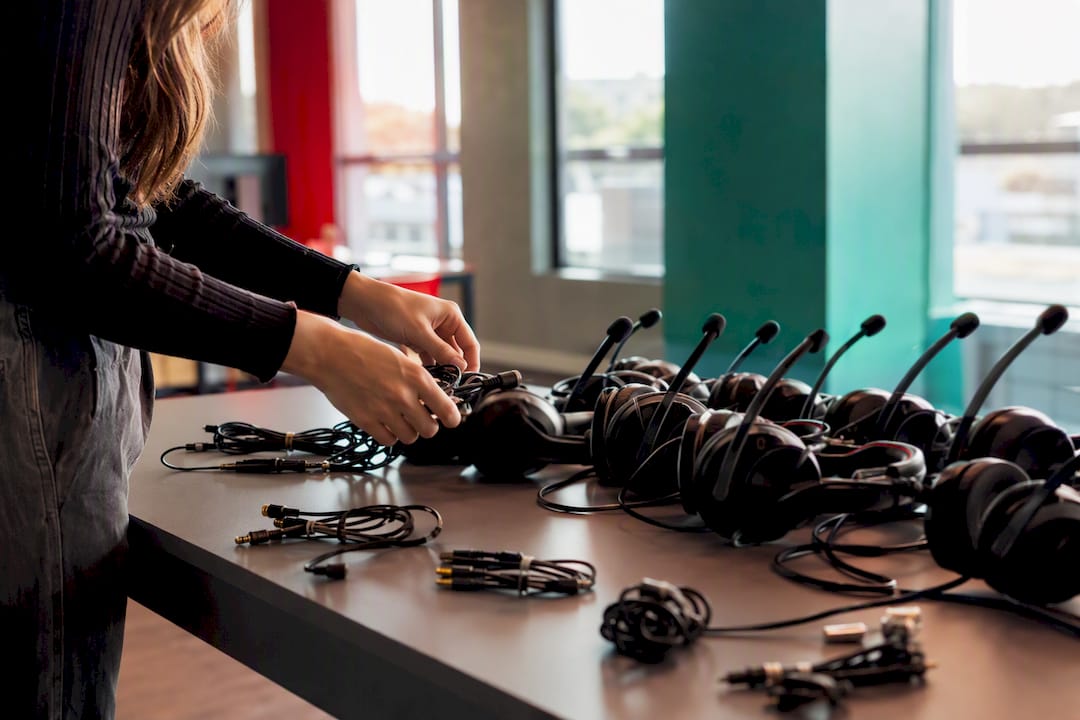
The first is choosing shared-pool staffing to save money upfront, then discovering agents rotating across unrelated accounts have no real depth in RG protocols or brand tone. The second is underestimating how much training KYC and RG handling actually require. It’s not a half-day briefing. The third is skipping surge rehearsal entirely, then getting blindsided when a jackpot drop triples ticket volume and nobody tested the activation process beforehand.
None of these mistakes are exotic. They’re predictable, and they’re avoidable with the right vetting upfront.
— Miroslav
Get a dedicated night-shift team live in weeks, not quarters
Workanova builds dedicated night-shift teams for licensed operators, agents trained specifically on RG escalation, KYC accuracy, and VIP retention, with 24/7 live chat and email coverage backed by contractual SLAs instead of best-effort promises. Unlike stretching an in-house team across overnight hours or gambling on a shared-pool vendor, you get a team that’s live and trained on your product within weeks, with surge capacity already built into the plan for your next major event or jackpot drop.
If you’re evaluating whether outsourcing your night shift makes sense, start with the 24/7 iGaming player support page to see how the model works end to end, or go straight to requesting a pilot SLA and a 4-week setup plan through the player support outsourcing page for game studios. Either way, you’ll walk away with a concrete plan instead of another vendor deck.
Sources
- How iGaming operators manage customer support at scale with offshore BPO teams | Outsource Accelerator
- Player Support Outsourcing Guide 2026: Complete Strategy
Recommended
- iGaming Customer Support Outsourcing: The Operator’s Guide
- Workanova | Scale iGaming Support Without 50 New Hires
- Workanova | Outsourced Customer Support Live in 4 Weeks
- Workanova | Hidden Cost of Poor iGaming Player Support
Meeting us in person? Workanova is exhibiting at SBC Summit Lisbon 2026 — Stand B606, Hall 2, 29 September to 1 October. Book a slot and we will walk you through how a dedicated player support team is staffed, trained and live in 4–8 weeks.