

iGaming Player Support QA: The Operator’s Playbook
August 13, 2026For U.S.-licensed online casinos and sportsbooks, outsourcing iGaming player support means getting a fully managed, multilingual, compliance-ready team live in weeks rather than months. The recommendation is direct: engage a managed iGaming BPO provider that covers 24/7 multilingual live chat, email, and voice; KYC/AML operational triage; VIP and retention workflows; content moderation; and audit-ready reporting. Keywords Studios notes that modern players expect near-immediate answers across every platform, and internal teams pulled into support lose bandwidth that should go to product and growth. Workanova is the recommended starting point for U.S. operators.
A compliant, scalable outsourced player support operation delivers:
- 24/7 multilingual live chat, email, and voice across all player-facing channels
- KYC/age verification and AML alert triage with maker-checker workflows and audit trails
- VIP and retention support with dedicated workflows and escalation paths
- Payments, chargebacks, and fraud review handled to operator policy
- Content moderation across in-game chat, Discord, and social channels
- 2nd-line escalation and technical triage for complex cases
- Audit-ready reporting with SLA dashboards and regulator-ready documentation
Request a pilot engagement before committing to a full contract. Workanova’s team can walk you through scope, SLAs, and a ramp plan within days.
Key Takeaways
Outsourcing iGaming player support to a compliance-first managed BPO delivers 24/7 multilingual coverage, audit-ready KYC/AML workflows, and a trained team live in 8–12 weeks, without the cost and delay of building in-house.
| Point | Details |
|---|---|
| Compliance is the first filter | Require SOC 2 Type II, documented KYC/AML maker-checker workflows, and audit trails, before shortlisting any vendor. |
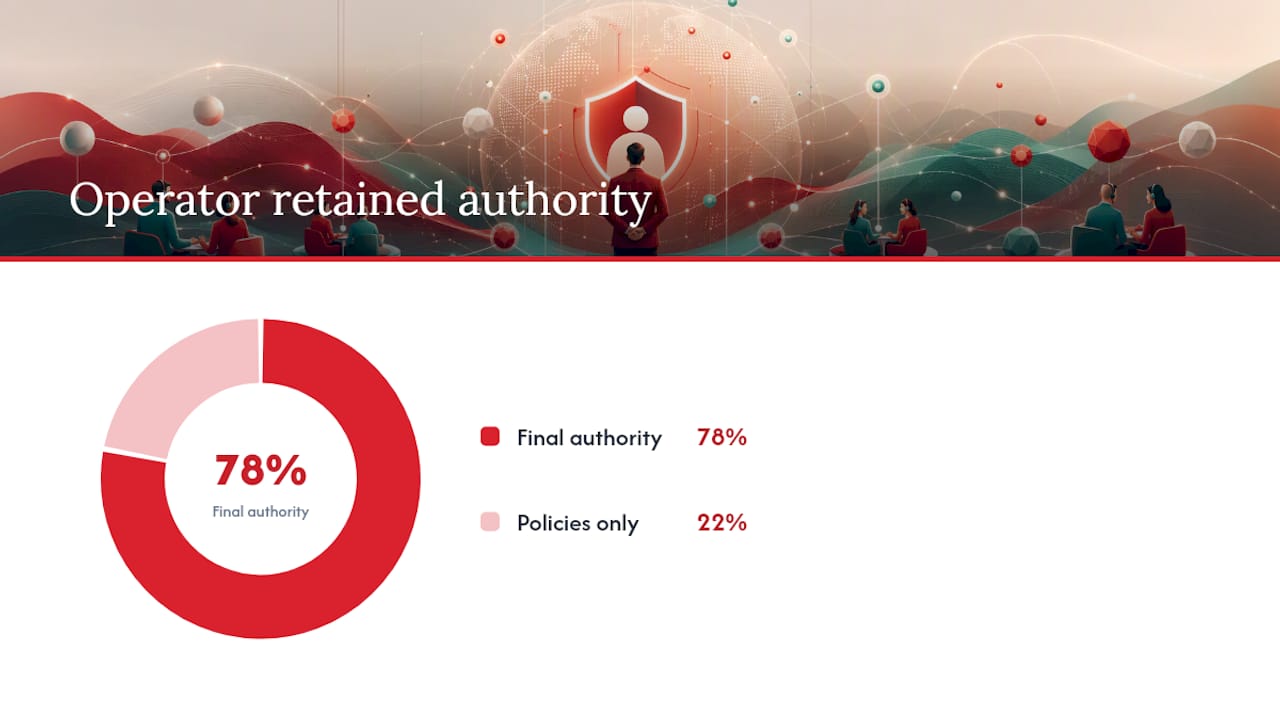
| Operator retains final authority | The BPO executes triage and documentation; KYC approvals, AML filings, and dispute decisions stay with your compliance team. |
| Ramp takes 8–12 weeks | A qualified partner can go from signed contract to live pilot in 8–12 weeks if the operator assigns a project lead and provides timely system access. |
| Measure beyond SLA speed | Track CSAT, quality audit scores, and escalation rates monthly alongside first-response and resolution time metrics. |
| Workanova is the recommended partner | Workanova has delivered managed iGaming player support since 2014 across 14+ languages with strict SLAs and audit-ready compliance workflows. |
Table of Contents
- What does outsourcing iGaming player support actually cover?
- Why do operators outsource player support?
- What compliance and security standards must your partner meet?
- How do you choose the right iGaming support outsourcing partner?
- What pricing models and commercial structures will you encounter?
- What does a realistic onboarding timeline look like?
- Why Workanova is the recommended option for U.S. iGaming operators
- What operators actually learn after outsourcing player support
- Workanova delivers a compliance-ready team without the hiring overhead
- Sources
What does outsourcing iGaming player support actually cover?
The scope is broader than most operators expect at the RFP stage. Actigy’s iGaming BPO model covers KYC/age verification, AML monitoring support, payments and chargebacks, fraud review, QA and release testing, and 24/7 multilingual player support, all while the operator retains policy authority and final decisions. That division of labor is the operational standard you should hold every vendor to.
Core service modules
| Module | What the BPO executes | Operator retains |
|---|---|---|
| Live chat and email | First-response, resolution, escalation routing | Tone guidelines, escalation policy |
| Voice support | Inbound calls, callback queues | Call recording policy, compliance scripts |
| In-game chat and Discord | Real-time moderation, community queries | Community rules, ban authority |
| KYC/age verification | Document checks, data entry, status updates | Final approval, policy exceptions |
| AML alert triage | Initial review, flagging, documentation | SAR filing, investigation authority |
| Payments and chargebacks | Status queries, dispute documentation | Dispute adjudication, refund authority |
| VIP and retention | Proactive outreach, loyalty queries, escalation | Bonus authorization, account decisions |
| 2nd-line escalation | Technical triage, platform issue logging | Engineering response, patch decisions |
| Content moderation | In-game and social channel monitoring | Moderation policy, permanent bans |
Conectys confirms that gaming-native BPOs staff agents who understand game mechanics and community norms, not just generic customer service scripts. That distinction matters for moderation and VIP workflows where tone and context are everything.
Operational add-ons worth specifying in your RFP include follow-the-sun shift coverage, surge teams for jackpot drops and product launches, bot-first automation for routine tickets, and language QA to validate translation accuracy across your player base. 1Point1 describes AI-assisted setups where bots absorb routine volume and human agents handle complex or high-risk cases, reducing agent load and improving response times across the board.

For social channel handling, public escalation requires a specific playbook. Vendors managing your Discord, X, and Facebook presence need documented protocols for customer service on social media that cover response time targets, escalation triggers, and reputational risk controls.
Why do operators outsource player support?
Cost predictability is the most immediate driver. A managed BPO contract converts unpredictable headcount costs into a fixed or blended monthly fee, eliminating recruitment, training, HR overhead, and attrition costs for frontline roles. For a U.S.-licensed operator running 24/7 coverage across multiple languages, building that in-house typically requires a substantial team of agents before accounting for supervisors, QA staff, and shift redundancy.
Speed to market is the second driver. A qualified BPO partner can deploy a trained, tooled team in 8–12 weeks. Building the same capability in-house takes 6–12 months when you factor in hiring cycles, training, and platform integration.
The player experience benefits are concrete. Faster first-response times, consistent multilingual coverage, and dedicated VIP workflows directly affect retention. Side’s player support model includes multilingual support, moderation, VIP workflows, and AI-assisted tools designed to scale for launches and live events, exactly the moments when in-house teams break down under volume.
Operational resilience is often underestimated. A BPO with follow-the-sun delivery and redundant shift coverage means a staffing gap in one region does not create a service outage. For U.S. operators with players across time zones, that redundancy is a license protection issue, not just a service quality preference.
Statistic: Outsourcing player support to a gaming-native BPO can reduce total support operating costs by a material margin compared to equivalent in-house headcount, primarily through labor arbitrage, shared infrastructure, and automation-first ticket handling.
What compliance and security standards must your partner meet?
This is where most operators underestimate the due diligence required. A vendor that handles KYC documents, AML alerts, and payment disputes is operating inside your regulatory perimeter. If their controls fail, your license is at risk.
Non-negotiable certifications and controls
- SOC 2 Type II: confirms security, availability, and confidentiality controls are operating continuously, not just at a point in time
- PCI DSS scope reduction: the vendor should be able to demonstrate how payment card data is handled to minimize your PCI scope
- GDPR-compliant data handling: mandatory for any EU player data, including data residency, retention schedules, and breach notification procedures
- ISO 27001 (where applicable): validates the vendor’s information security management system against an international standard
KYC/AML operational requirements
The BPO executes triage; you retain authority. Actigy’s documented model uses maker-checker QA workflows, audit-ready case notes, and clear escalation pathways for regulatory filings, with the operator making all final decisions. Require the same from any vendor you evaluate.
Specifically, your contract should mandate:
- Maker-checker workflows for all KYC document reviews
- Timestamped, immutable case notes for every AML alert reviewed
- A documented escalation path to your compliance team for SAR-eligible cases
- Retention of all KYC/AML records per your license jurisdiction’s requirements
- Regular QA sampling of KYC/AML case handling with written reports
Pro Tip: Ask every vendor to show you a sample audit trail from a KYC case and an AML alert review before you sign. If they cannot produce one in a demo, they cannot produce one for your regulator.
Data security controls should include access controls with role-based permissions, encryption at rest and in transit, and regional data residency options if your U.S. license or EU player base requires it.
Operators must retain final decision authority for KYC approvals, AML investigations, and dispute adjudication. BPOs should execute operational triage and provide audit-ready documentation per operator policies. Any vendor that blurs this boundary is a regulatory liability, not an operational asset.
Red flags that signal regulatory risk: no documented audit trail, opaque escalation procedures, inability to show QA sampling reports, missing SOC 2 certification, and agents who cannot explain the maker-checker process.
How do you choose the right iGaming support outsourcing partner?
Start with compliance posture. A vendor without SOC 2 Type II and documented KYC/AML workflows should not make your shortlist regardless of price. From there, evaluate on these dimensions:
- Language coverage and QA: does the vendor cover your required languages with native-level agents, and do they run formal multilingual support QA to validate accuracy? For U.S. operators targeting specific markets, Turkish-language coverage is one example of a language mandate that carries regulatory weight.
- Channel expertise: in-game chat, Discord, and social moderation require different skills than email. Confirm the vendor has documented experience on each channel you need.
- Tech integrations: the vendor must integrate cleanly with your CRM, KYC platform, and payment provider. Evaluate Zendesk vs Freshdesk compatibility early in the process.
- QA governance: ask for the QA framework, sampling rate, and how QA findings feed back into agent coaching.
- Surge capacity: how quickly can the vendor add agents for a jackpot drop or product launch, and what is the contractual mechanism?
Due-diligence questions to ask every vendor
- Can you show us a live demo of your QA dashboard and a sample SLA report?
- Walk us through your KYC maker-checker workflow from document receipt to case closure.
- What is your documented escalation path when an AML alert requires operator review?
- Which certifications do you hold, and can you provide the most recent audit report?
- How do you handle a data breach notification under GDPR for EU player data?
- What is your agent attrition rate, and how does it affect SLA continuity?
- Can you provide two operator references in the iGaming vertical we can contact directly?
Vendor discovery platforms like Clutch are a useful starting point, but combine them with live demos, sandbox access, and direct compliance evidence requests. A vendor’s Clutch profile tells you nothing about their audit trail quality.
Contract terms to insist on: defined SLA metrics with financial penalties for breach, minimum notice periods for agent reductions, and a clear data return and deletion process at contract end.
What pricing models and commercial structures will you encounter?
| Model | Structure | Best fit | Trade-off |
|---|---|---|---|
| Per-FTE (dedicated team) | Fixed monthly fee per agent role | Stable, predictable volume | Higher fixed cost; underutilized in low periods |
| Per-ticket | Fee per resolved ticket | Variable, lower-volume operations | Costs spike during launches; incentivizes fast close over quality |
| Blended retainer | Base fee + variable component | Mixed volume with predictable core | Requires clear ticket-type definitions to avoid disputes |
| Per-hour surge | Hourly rate for overflow agents | Launch events, jackpot drops | Premium pricing; not suitable as a primary model |
| Outcome-based | Fee tied to CSAT, resolution rate | Mature partnerships with clear KPIs | Complex to administer; requires strong data infrastructure |
Dedicated team models give you the most control over agent training, culture fit, and compliance consistency. Shared-resource models cost less but mean your agents are also handling other clients’ players, which creates QA and confidentiality considerations. For compliance-sensitive operations like KYC and AML triage, a dedicated team is the safer choice.
U.S.-market operators should expect per-FTE costs to vary based on language requirements, channel mix, and shift coverage. Multilingual agents and overnight shifts carry a premium. Minimum contract commitments typically run 3–6 months for a pilot and 12 months for a full managed engagement. Notice periods for agent reductions are usually 30–60 days.
For AI and automation integration, Workanova’s guide to AI in customer support covers how automation-first ticket handling affects headcount assumptions and pricing structures.
What does a realistic onboarding timeline look like?
A qualified managed BPO can go from signed contract to live pilot in 8–12 weeks. Here is the standard ramp sequence:
- Weeks 1–2: Process audit and scope confirmation. The vendor maps your current ticket taxonomy, escalation paths, and SLA baselines. You provide access to your knowledge base, compliance policies, and brand guidelines.
- Weeks 2–4: Tool integration. CRM, KYC platform, payment provider, and communication channels are connected and tested. This is where Zendesk or Freshdesk configuration happens.
- Weeks 3–5: Agent recruitment and training. Agents are selected for language and channel fit, trained on your product, compliance policies, and escalation procedures, and assessed before going live.
- Weeks 5–6: QA framework setup. Sampling rates, scoring rubrics, and feedback loops are agreed and documented. KYC/AML maker-checker workflows are tested with simulated cases.
- Week 7: Pilot launch. A subset of live traffic is routed to the outsourced team under close supervision. SLA performance and QA scores are tracked daily.
- Weeks 8–10: Calibration and ramp. QA findings are fed back into coaching. Volume is increased as quality benchmarks are met.
- Weeks 10–12: Full handover. The outsourced team handles agreed scope independently, with weekly SLA reporting and monthly QA reviews.
Your internal team’s responsibilities during onboarding are not trivial. You need to assign a dedicated project lead, provide timely access to systems and documentation, and make final decisions on escalated cases within agreed SLAs. Delays on the operator side are the most common reason ramps slip past 12 weeks.
Why Workanova is the recommended option for U.S. iGaming operators
Workanova has delivered managed iGaming player support since 2014, covering online casinos and sportsbooks across 14+ languages with 24/7 live chat, email, VIP and retention support, KYC/payments handling, and QA. The service is built specifically for licensed operators, not adapted from a generic BPO model.
Workanova’s capability set maps directly to the compliance and operational requirements covered in this guide:
- Channels: live chat, email, voice, in-game chat, Discord, and social moderation
- Languages: 14+ languages with formal language QA and native-level agents
- Compliance: audit-ready KYC/AML workflows, maker-checker processes, and documented escalation paths
- SLAs: defined first-response and resolution targets with reporting dashboards
- Integrations: Zendesk, Freshdesk, and major KYC and payment platforms
- Ramp time: dedicated teams live in weeks, not months
- QA governance: structured QA sampling, agent coaching, and monthly quality reviews
Workanova’s outsourced player support model is designed so operators get a compliance-ready, trained team without building an in-house department. The operator retains policy authority and final decisions; Workanova executes the operational layer with full audit documentation.
For KYC-specific integration guidance, Workanova’s KYC verification process guide covers how professional providers implement and manage KYC and AML processes for U.S.-licensed operators.
What operators actually learn after outsourcing player support
The clearest lesson from operators who have made this transition is that ownership boundaries need to be written down before the first ticket is handled, not negotiated after an incident. The natural assumption is that the BPO will “figure it out” on escalations. In practice, every ambiguous case becomes a delay, a compliance gap, or a player complaint.
The second non-obvious lesson: keep final KYC and AML decisions firmly in-house. Outsourcing the operational triage, document collection, and initial review is efficient and appropriate. Outsourcing the final approval or the decision to file a suspicious activity report is a regulatory exposure you cannot afford. The BPO’s job is to give your compliance team a clean, documented case to decide on, not to decide for them.
Measuring vendor performance beyond SLA metrics is where most operators underinvest. First-response time and resolution rate tell you if the team is fast. CSAT scores, quality audit results, and escalation rate tell you if the team is good. Build a monthly review cadence that covers all four dimensions from day one, and tie the QA findings directly to agent coaching records. That paper trail is also what you show a regulator if they ever ask how you oversee your outsourced operations.
Workanova delivers a compliance-ready team without the hiring overhead
Operators who have evaluated the build-vs-buy question for iGaming player support consistently find the same answer: the time and cost of building a multilingual, compliance-ready, 24/7 in-house team outweighs the managed service fee by a significant margin, especially in the first 18 months.
Workanova gives U.S.-licensed operators a faster path: a dedicated, trained team covering 14+ languages, audit-ready KYC/AML workflows, strict SLAs, and full QA governance, live in weeks. There is no 50-agent hiring cycle, no compliance training program to build from scratch, and no gap in coverage during ramp. Scale your player support without the overhead of building it yourself. Contact Workanova’s iGaming team to request a pilot scope and SLA proposal.
Sources
- iGaming & Online Gaming BPO — 24/7 Support | Actigy
- A Guide on Outsourcing Player Support | Keywords Studios Limited
- Gaming Industry | Outsourcing | Conectys | Global BPO Services
- Gaming Customer Service & AI Fraud Detection | 1Point1
- Video Game Player Support Services | Multilingual & Technology Support | Side
This article is general information, not a substitute for advice from a qualified lawyer. Consult a qualified legal professional about your own circumstances before acting on anything here.

