

CDP vs CRM: A Practical Guide for Marketing and Sales Leaders
August 8, 2026Choose the vendor whose verified operational capacity, security posture, and measurable pilot results meet your minimum scorecard — then run a timed pilot with pre-defined KPI thresholds before signing anything long-term. This rule eliminates most bad outsourcing decisions. [As recommended throughout the guide, all pilots must be scoped with written KPI thresholds as a binding conversion condition.]
Before you schedule a single demo, require two things: a current security certification report and at least one anonymized performance dashboard from a comparable engagement. If a vendor cannot produce both within 48 hours, remove them from your shortlist. Then take your top three candidates and design a short pilot with predefined duration with pre-defined KPIs. The global BPO market has grown large enough that you will not run out of qualified options — but it has also grown crowded enough that polished sales decks are no longer a reliable signal of operational quality.
- Minimum evidence to require immediately: SOC 2 Type II or ISO 27001 certificate, one anonymized KPI dashboard from a live engagement, and proof of professional liability insurance.
- Immediate next step: Shortlist three vendors, send a structured RFP with the screening checklist below, and schedule a short pilot with predefined duration with written success criteria before any contract is signed.
Key Takeaways
A structured outsourcing partner evaluation requires verified security credentials, a scoped pilot with pre-defined KPI thresholds, and a weighted scorecard to convert subjective impressions into a defensible award decision.
| Point | Details |
|---|---|
| Security is a hard gate | Require SOC 2 Type II or ISO 27001 before advancing any vendor to full evaluation. |
| Pilot before you commit | Run a a short pilot with predefined duration and written KPI thresholds; missing performance targets triggers early exit from the pilot. |
| Score with a weighted model | Use a six-category weighted scorecard; vendors scoring below 3.0 out of 5.0 are rejected. |
| TCO beats headline rate | Build a 12–36 month TCO model including ramp-up, management fees, and change-order costs. |
| Workanova as your pilot partner | Workanova delivers a dedicated iGaming support team live in weeks, with SOC/ISO-aligned controls and strict SLAs from day one. |
Table of Contents
- Does your vendor pass the rapid screening checklist?
- How to evaluate industry experience, track record, and case studies
- How to assess technical skills, tooling, integration, and infrastructure
- How to inspect the vendor’s communication model, governance, and account management
- How to verify security posture, certifications, and contract protections
- Evaluating workforce quality: hiring, retention, training, and culture fit
- Financial health, insurance, BCP, and business-continuity checks
- How to compare pricing models and calculate total cost of ownership
- What to request from references and how to verify case studies
- Designing and running a pilot that proves real capability
- Setting SLAs, KPIs, and governance routines that keep the partnership on track
- Scoring vendors: a simple weighted scorecard and when to use advanced MCDM
- Final decision checklist and recommended selection timeline
- The pilot is where most buyers get it wrong
- Workanova meets the evaluation checklist from day one
- Sources
Does your vendor pass the rapid screening checklist?
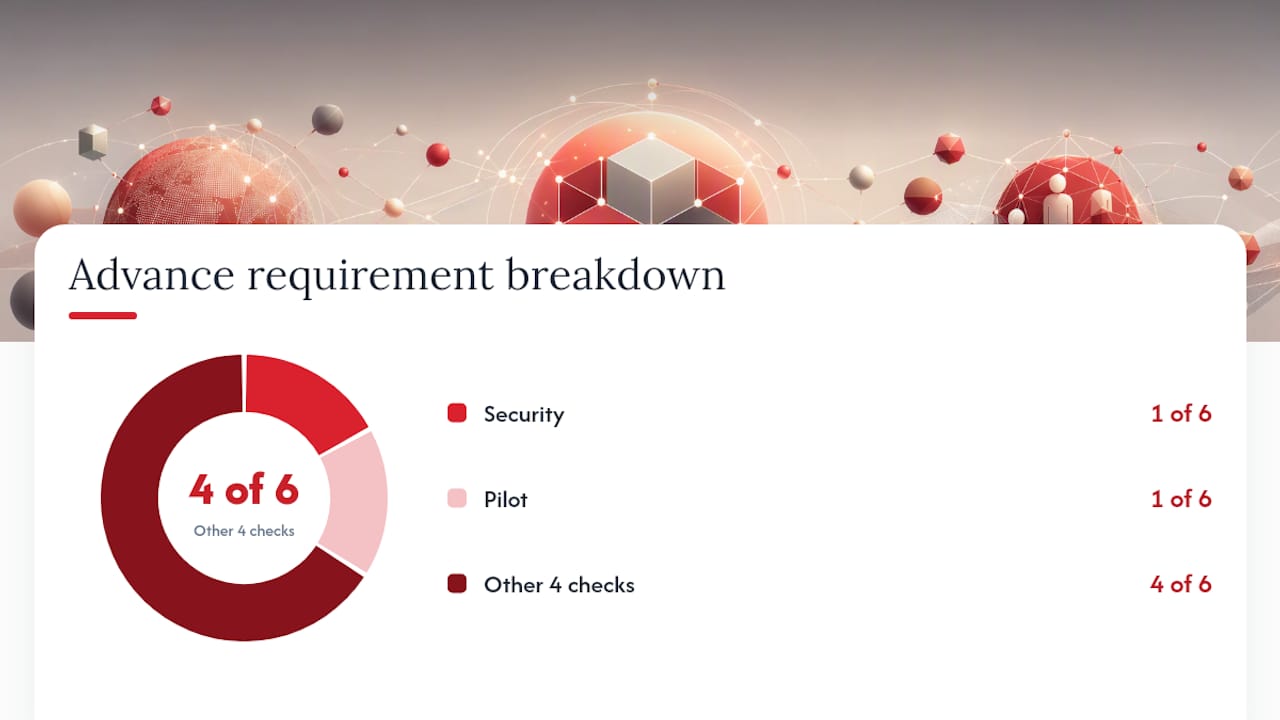
Use this table as a binary pass/fail gate. A vendor must pass at least a majority of the checks, and they must pass both the security item and the pilot-eligible item, or they do not advance.
| Screening Check | Pass Criteria | Evidence to Request |
|---|---|---|
| Minimum relevant experience | 3+ years in your industry or a regulated vertical | Client list with tenure dates, anonymized case studies |
| Security certification | Current SOC 2 Type II or ISO 27001 certificate | Certificate with issuer name and expiry date |
| Baseline SLA commitment | Response time and availability SLAs stated in writing | Draft SLA or service schedule from a prior contract |
| Language and hours coverage | Native or C1+ proficiency in required languages, overlap hours confirmed | Language test results, staffing schedule |
| Financial proof | Audited financials or bank reference letter | Most recent financial statements or bank reference |
| Insurance and BCP | Professional liability insurance active, BCP document available | Certificate of insurance, BCP summary |
| Data handling zone | Data residency matches your legal requirements | Data processing agreement or DPA summary |
| Pilot-eligible | Willing to run a scoped short pilot with predefined duration with defined KPIs | Written pilot proposal with success criteria |
Vendors who pass six or more checks, including security and pilot-eligible, move to full evaluation. Everyone else is out.
How to evaluate industry experience, track record, and case studies
Relevant experience is not the same as years in business. A vendor with ten years of general BPO work and zero exposure to regulated environments like iGaming, fintech, or healthcare is a higher risk than a five-year specialist who has handled KYC queues, payment disputes, and compliance escalations under real regulatory pressure.
When you ask for case studies, look for measurable results: CSAT scores, first-contact resolution rates, average handle time trends, and client tenure. A case study that describes activities without outcomes is a marketing document, not evidence. Ask for the client contact who can verify the numbers.
What to request during RFP or reference checks:
- Anonymized KPI dashboards from at least two comparable engagements, showing performance over 6+ months
- Client tenure data: average contract length and number of clients who have renewed at least once
- Specific examples of how the vendor handled a volume spike, a compliance change, or a client escalation
- The name and role of a reference contact at each cited client, available for a 20-minute call
Score each case study on four dimensions: presence of quantified outcomes, independent verifiability, recency (within 36 months), and relevance to your process type. A vendor who scores well on all four is worth advancing. One who scores well on only recency and relevance but cannot produce verifiable numbers should be treated with caution. Experienced buyers consistently rank support quality and post-sale service above price once they have been through a failed outsourcing engagement — a pattern documented across operational procurement research.
How to assess technical skills, tooling, integration, and infrastructure
Technical fit is where many outsourcing decisions quietly fail. A vendor can have excellent agents and still create months of integration pain if their tech stack is incompatible with yours.
The minimum technical criteria to verify before advancing a vendor:
- Tech stack alignment: Does the vendor’s CRM, ticketing system, or contact center platform integrate with your existing tools via API or webhook? Ask for an integration diagram.
- Observability and logging: Will you have read access to performance logs, ticket queues, and quality monitoring dashboards? Vendors who restrict your visibility into live operations are a governance risk.
- Environment parity: Can the vendor mirror your staging environment for testing before go-live? This matters especially for KYC and payment workflows.
- Escalation paths: Is there a documented second-line escalation process, and does it connect to your internal teams without manual handoffs?
- Access controls: How is SSO or role-based access managed? Request their access policy document.
Run a technical interview with the proposed team leads, not just the sales engineer. Ask them to walk through a data flow diagram for your specific use case. Request CVs for the team members who will actually work your account, not a generic capability deck. The ARDURA Consulting scorecard model includes deployment speed, replacement guarantees, and security as weighted criteria precisely because these are the dimensions that create hidden costs when they go wrong.
How to inspect the vendor’s communication model, governance, and account management
A vendor’s governance model tells you how problems will be handled six months into the contract, when the sales team is no longer involved. Weak governance is the leading cause of outsourcing drift: SLAs that technically pass but operationally disappoint, reporting that arrives late or in inconsistent formats, and escalations that cycle without resolution.
Governance checklist to verify before signing:
- Named account manager and program manager with direct contact details
- Documented escalation matrix: who to call at what severity level, with response time commitments
- Overlap hours: sufficient shared working time per day between your team and theirs
- Meeting cadence: weekly operational review, monthly business review, and quarterly strategy session, all with standing agendas
- Reporting format: standardized weekly and monthly reports covering ticket volume, SLA adherence, CSAT, and open issues
A healthy RACI for vendor governance assigns Responsible and Accountable roles to the vendor for day-to-day operations, with Consulted and Informed roles for your internal team on escalations and contract changes. If the vendor cannot produce a draft RACI within a week of your request, that is a red flag.
Watch for these warning signs: no named point of contact beyond the sales rep, SLA language that uses ranges instead of fixed thresholds, and reporting that changes format from month to month. Each of these signals an organization that manages by exception rather than by design.
How to verify security posture, certifications, and contract protections
Security due diligence is not optional, and it is not satisfied by a vendor’s self-attestation. For any engagement involving player data, payment information, or KYC records, you need third-party-verified proof.
Certifications and artifacts to request:
- A third-party security audit report, such as a SOC 2 Type II report, or equivalent security certification; request the full report or a bridge letter if the audit period has lapsed and confirm applicable trust service criteria.
- ISO 27001 certificate or an equivalent recognized security certification; verify certificate details with the issuing body.
- PCI-DSS evidence: required if the vendor handles cardholder data or payment processing; request their Attestation of Compliance (AOC)
- Recent penetration test or vulnerability assessment report: within the last 12 months, conducted by an independent third party
- ISO 18295 compliance: for contact center quality management, ISO 18295-1:2017 specifies service requirements and applicable KPIs across all channels and sizes
Contract clauses to insist on:
- Data handling and localization: specify where data is stored, processed, and backed up
- Breach notification timeline: 72 hours or less, consistent with GDPR and US state breach notification laws
- Audit rights: your right to conduct or commission a security audit with reasonable notice
- IP ownership: all work product, training data, and process documentation belongs to you
- Termination data return and destruction: vendor must return or certify destruction of all your data within 30 days of contract end
Reviewing an audit summary is not the same as reviewing the report. Ask for the management response section of the SOC 2 report, which shows how the vendor addressed any exceptions. A vendor with a clean report and no management response section has either a perfect operation or a redacted document.
Evaluating workforce quality: hiring, retention, training, and culture fit

The agents handling your customers are the product. A vendor’s hiring and retention model directly determines whether you get consistent quality or a revolving door of undertrained staff.
Workforce metrics to request:
- Average agent tenure by role (support, QA, team lead)
- Annual churn rate for frontline agents
- Trainer-to-agent ratio during onboarding and steady state
- Time-to-fill for replacement hires
- Language proficiency test results for the specific languages you need (not just “we support 14 languages”)
Ask to see the training curriculum for your role type. A credible vendor will show you a structured onboarding program with defined milestones, a QA calibration process, and a documented escalation training track. Vendors who describe training as “on-the-job learning” without a structured program are telling you something important about their quality consistency.
For multilingual operations, language quality assurance is a distinct discipline from general QA. Ask specifically how the vendor tests and monitors language quality for each market, not just whether they have native speakers on staff.
Cultural and timezone fit matters more than most buyers acknowledge. A vendor whose team works a 9-to-5 in a timezone with two hours of overlap with your operations team will create communication latency that compounds over time. Verify overlap hours with a staffing schedule, not a promise.
Financial health, insurance, BCP, and business-continuity checks
A vendor who cannot survive a cash-flow disruption cannot deliver your SLAs during one. Financial stability checks are not bureaucratic box-ticking; they are a direct proxy for operational resilience.
Documents to request:
- Most recent two years of financial statements (audited preferred; management accounts acceptable for smaller vendors)
- Certificate of professional liability insurance, with coverage limits and expiry date
- Evidence of audited revenues or a bank reference letter from a recognized institution
- Business continuity plan (BCP): a written document, not a verbal assurance
Red flags that should pause your evaluation:
- Operating history under three years with no parent company guarantee
- Frequent ownership changes or recent acquisition without a clear integration plan
- Opaque financials: refusal to share any financial documentation or insurance proof
- No BCP document, or a BCP that has never been tested
When reviewing a BCP, ask one specific question: “Walk me through what happened the last time you had a service interruption and how you responded.” A vendor with a real BCP will have a real answer with dates, actions, and outcomes. A vendor reading from a template will not.
How to compare pricing models and calculate total cost of ownership
The headline rate is rarely the number that matters. Two vendors quoting similar per-agent rates can produce a 40% TCO difference over 24 months once you account for ramp-up costs, management fees, tooling pass-throughs, and change-order pricing.
Pricing dimensions to compare across vendors:
- Staff rates: per-agent per-month or per-hour, broken out by role and seniority
- Management fees: program manager, account manager, and QA lead costs, whether bundled or separate
- Ramp-up and training charges: one-time onboarding fees, knowledge transfer costs, and who pays for replacement training
- Tooling and license pass-throughs: CRM seats, telephony, QA software, and any platform licenses billed to you
- Change-order pricing: what triggers a change order and at what markup rate
Build a 12–36 month TCO model that includes headcount-equivalent cost (what you would spend hiring in-house), onboarding and management overhead on your side, and a realistic estimate of change-order volume based on your historical operational change rate. Outsourcing can double revenue impact when TCO is modeled correctly and the vendor’s incentives align with your growth targets.
Practical negotiation levers:
- Fixed-price pilot: cap the pilot at a flat fee so you can evaluate without open-ended cost exposure
- SLA-based credits: tie a percentage of the monthly fee to SLA adherence, creating a financial incentive for the vendor to perform
- Markup caps: negotiate a ceiling on change-order markup rates in the master services agreement
- Trial-to-contract conversion terms: agree in writing on the agreed pricing and scope for contract conversion
What to request from references and how to verify case studies
Reference calls are only useful if you ask questions that cannot be answered with “they were great.” Structure every reference call around specific, measurable outcomes.
Reference call template:
- “What was your ticket volume when you started with this vendor, and what is it now?”
- “What was their average CSAT score in the first 90 days versus steady state?”
- “Describe a situation where something went wrong. How did the vendor respond, and how long did it take to resolve?”
- “How long did it take from contract signature to the team being fully operational?”
- “Would you re-sign with this vendor today? Why or why not?”
For case studies, apply a four-point verification test: Are the outcomes quantified? Is there a named client contact who can verify them? Is the engagement recent (within 36 months)? Is the process type comparable to yours? A case study that passes all four is strong evidence. One that passes only two is marketing material.
Request anonymized performance dashboards and sample monthly reports from prior engagements. These show you what governance actually looked like, not what the vendor promises it will look like.
Designing and running a pilot that proves real capability
A pilot is the single most reliable evaluation tool available to you. No scorecard, reference call, or RFP response tells you as much as four weeks of live operational data.
-
Define success criteria before the pilot starts. Write down the specific KPI thresholds that constitute a pass: for example, CSAT above a defined target, first-contact resolution above a defined rate, and average handle time within a defined range. If you cannot agree on these in writing before the pilot begins, the pilot will not produce a defensible decision.
-
Scope the pilot to a representative workload. Use a real ticket type and volume that reflects your steady-state operations, not a curated sample. A vendor who performs well on easy tickets but struggles with payment disputes or escalations will not show you that on a cherry-picked pilot.
-
Assign a named pilot manager on both sides. The vendor’s pilot lead and your internal point of contact should meet daily for the first week and three times per week thereafter. Daily check-ins surface problems before they become patterns.
-
Run a structured onboarding checklist. Confirm knowledge transfer completion, system access provisioning, escalation path testing, and a first-week QA calibration session before the pilot goes live. Setting up an outsourced team in four weeks is achievable, but only if onboarding is treated as a project with milestones, not a handoff.
-
Measure CSAT, FCR, and AHT weekly. These three core support quality metrics give you a complete picture of speed, accuracy, and customer experience. Track them weekly, not just at the end of the pilot.
-
Define exit criteria tied to performance thresholds. If the vendor misses two consecutive weekly KPI targets by more than a defined margin, the pilot ends early. This protects you from sunk-cost bias and keeps the evaluation honest.
Setting SLAs, KPIs, and governance routines that keep the partnership on track
SLAs without governance are just numbers in a contract. The governance routine is what converts those numbers into operational accountability.
Prioritized SLA metrics to include:
- Availability: uptime percentage for the support channel (live chat, email, phone), typically 99.5%+ for 24/7 operations
- Response time: first response time by channel (live chat under 30 seconds, email under 4 hours are common benchmarks for iGaming support)
- CSAT: customer satisfaction score, measured per interaction or per session
- FCR (first-contact resolution): percentage of issues resolved without escalation or callback
- Accuracy: error rate for KYC, payment processing, or data entry tasks where applicable
- Escalation turnaround: time from escalation trigger to resolution confirmation
Structure SLA credits as a percentage of the monthly fee, triggered when adherence falls below threshold for two consecutive weeks. A single-week miss is often a data anomaly; two consecutive weeks is a trend. Pair credits with a formal improvement plan requirement: the vendor must submit a root-cause analysis and corrective action plan within five business days of triggering a credit.
Recommended governance routine:
- Weekly operational review: ticket volume, SLA adherence, open issues, and staffing status
- Monthly business review: trend analysis, QA calibration results, and improvement plan updates
- Quarterly strategy session: capacity planning, contract scope review, and roadmap alignment
A documented RACI prevents the most common governance failure: both sides assuming the other is responsible for something critical.
Scoring vendors: a simple weighted scorecard and when to use advanced MCDM
A structured scorecard converts subjective impressions into a defensible procurement decision. Research supports using a focused set of a small number of key criteria for most operational selections, with the option to expand to a full multi-criteria model for large-scale or high-stakes decisions.
Simple weighted scorecard (example weights):
Score bands: 4.0–5.0 = Pass (advance to pilot); 3.0–3.9 = Conditional (advance with conditions); below 3.0 = Reject.
An AHP-based selection approach confirms that a compact, well-weighted model is practical and transparent for decision-makers, particularly when the evaluation team is small and the timeline is tight. For larger vendor sets or multi-region selections, the DEMATEL–CRITIC–TOPSIS model adds statistical rigor by combining expert-weighted criteria (DEMATEL) with objective, data-driven weights (CRITIC) and ranking vendors using TOPSIS. That study validated the approach across a large number of providers using several evaluation criteria grouped into four dimensions: capacity of operation, professional skills, service capacity, and environment management. The result is a classification into performance levels that is robust to criteria changes — useful when you are evaluating more than five vendors or when the decision has board-level visibility.
When to use which model:
- Fewer than five vendors, internal procurement team: use the weighted scorecard above
- Five or more vendors, cross-functional evaluation team, or regulated procurement: use DEMATEL–CRITIC–TOPSIS or a simplified TOPSIS with pre-agreed weights
Final decision checklist and recommended selection timeline
The evaluation process should move from shortlist to award in 6–10 weeks. Longer than that and vendor availability changes; shorter and you skip steps that protect you.
Final contract checkpoints before signing:
- Data processing agreement (DPA) reviewed and signed by legal
- IP ownership clause confirmed: all work product belongs to you
- Termination clause: notice period, data return timeline, and transition assistance obligations
- Trial-to-contract conversion terms: pricing, scope, and SLA continuity confirmed in writing
- Breach notification timeline: 72 hours or less, in writing
Suggested timeline (6–10 weeks):
- Weeks 1–2: Issue RFP, collect responses, apply screening checklist. Owner: Procurement.
- Weeks 3–4: Score vendors using weighted scorecard, conduct reference calls, request security artifacts. Owner: Procurement + Legal.
- Weeks 5–6: Run pilot with selected top vendors. Owner: Operations.
- Weeks 7–8: Review pilot results against pre-defined KPIs, finalize vendor selection. Owner: Operations + Procurement.
- Weeks 9–10: Legal review, contract negotiation, and signature. Owner: Legal + Finance.
Post-award immediate actions:
- 30-day checkpoint: onboarding complete, system access live, first QA calibration session done
- 60-day checkpoint: first full month of SLA data reviewed, any misses addressed with a corrective action plan
- 90-day checkpoint: first business review, capacity plan for next quarter confirmed, contract scope validated against actual volume
Avoid the most common outsourcing selection mistakes by treating the post-award period as a continuation of the evaluation, not the end of it.
The pilot is where most buyers get it wrong
The conventional wisdom on outsourcing evaluation focuses heavily on the RFP and the scorecard. Both matter. However, the single biggest mistake buyers make is treating the pilot as a formality rather than the primary decision instrument.
Most failed outsourcing engagements were not failed because the buyer chose the wrong vendor on paper. They failed because the pilot was either skipped, scoped too narrowly, or evaluated without pre-defined exit criteria. A vendor who knows the pilot has no teeth will perform adequately during it and revert to baseline after contract signature.
The fix is straightforward: write the pilot success criteria into the contract as the conversion condition. If the vendor does not hit the KPI thresholds during the pilot, the contract does not convert. That single clause changes the vendor’s incentive structure completely.
A second underrated mistake is skipping the technical interview with the proposed team. Sales engineers and account executives are skilled at presenting capability. The agents and team leads who will actually work your account are the ones you need to evaluate. Ask to meet them before the pilot starts. Ask them to walk through a real escalation scenario. The gap between what a vendor presents and what their frontline team can execute is often where the risk lives.
Finally, do not let price dominate the scorecard. Experienced operational buyers consistently rank support quality and post-sale service above cost once they have managed a failed low-cost engagement. A vendor who wins on price alone and loses on quality will cost you more in churn, rework, and re-procurement than the rate difference ever saved.
Workanova meets the evaluation checklist from day one
If you have worked through this guide and want a vendor who already maps to it, Workanova is built for exactly this evaluation. Since 2014, Workanova has delivered 24/7 multilingual iGaming player support across 14+ languages, with SOC/ISO-aligned security controls, strict SLAs, QA governance, and a dedicated team live in a short timeframe.
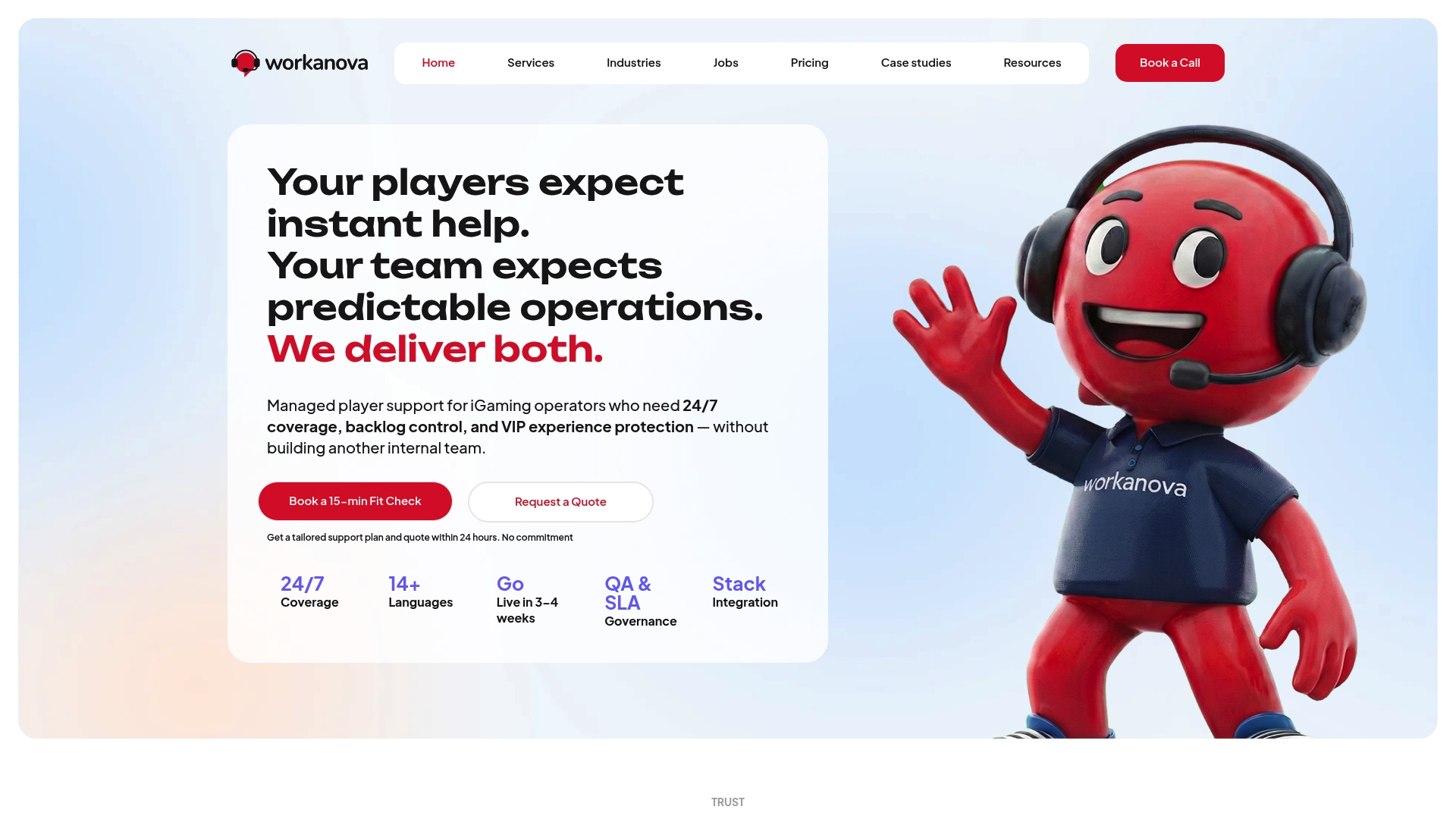
The checklist items Workanova covers directly: 24/7 multilingual coverage (live chat, email, VIP, KYC/payments), security posture aligned to SOC 2 and ISO 27001 standards, a structured QA calibration program, named account management with documented escalation paths, and a pilot-first engagement model with pre-defined KPIs. For operators who need to scale player support without a large hiring program, Workanova’s managed service model removes the headcount risk entirely.
Request a scoped pilot: contact Workanova to define the scope, agree on KPI thresholds, and get a dedicated team live within four weeks. The pilot terms, pricing, and conversion conditions are documented in writing before day one.
Sources
The sources below underpin the frameworks and checklists in this guide. Each one is worth reviewing directly if you are building a formal procurement process or presenting the evaluation methodology to a board or legal team.
- How to Evaluate an Outsourcing Partner
- IT Outsourcing Vendor Evaluation Scorecard | ARDURA Consulting
- Evaluating Outsourcing Partners: A Checklist For Businesses — Forbes
- URS Adriatica — ISO 18295 quality management for customer contact centers
This article provides general procurement guidance and does not constitute legal or compliance advice. Verify current certification standards and regulatory requirements with the relevant issuing bodies or a qualified professional before finalizing any vendor contract.

