

Launch Follow the Sun Support in 4–8 Weeks for Ops Leaders
September 3, 2026Payments fraud prevention works best as a layered system: preventive controls, real-time detection, and a formal response plan, all owned by someone with authority to act. That structure mirrors COSO’s fraud risk management framework, the behavioral logic behind the Fraud Prevention Pyramid, and the UK’s shift toward mandatory APP reimbursement. Your first moves this week: run a fraud risk assessment and turn on event-level monitoring for your highest-risk payment flows.
TL;DR:
- Running a fraud risk assessment and implementing event-level monitoring for high-risk payment flows are essential first steps to strengthen defenses.
- Combining machine-learning models with rule-based controls helps adapt to shifting fraud tactics and reduces false positives without sacrificing detection accuracy.
- Strengthening process controls, such as segregation of duties and manual review procedures, is crucial to prevent human error from enabling fraud.
- Speedy containment, evidence preservation, and proper documentation are vital for effective investigation and successful recovery, especially under UK reimbursement rules.
- Regularly reviewing fraud metrics like loss rate, false positives, and detection times improves program effectiveness and prevents decay over time.
Table of Contents
- What Is Payments Fraud Prevention, and Which Threats Matter Most?
- A Practical Framework: Preventive, Detective, and Response Controls
- Tools That Actually Reduce Fraud, Without Killing Conversion
- Process Controls That Close the Human Gap
- When Fraud Happens: Investigate, Contain, and Recover
- Measuring Whether Your Fraud Controls Are Working
- Where a Specialist Support Team Fits Into the Fraud Picture
- A Hands-On Checklist for Finance and Ops Leaders
- How Workanova Strengthens Your Fraud Defense Line
- Sources
- FAQ
What Is Payments Fraud Prevention, and Which Threats Matter Most?
Payments fraud prevention is the combined set of controls, tools, and processes a business uses to stop, catch, and recover from fraudulent transactions before they become losses. The threats differ by business model, so mapping them correctly determines where you spend your budget.
- Card-not-present (CNP) fraud: stolen card data used online without the physical card present. Retail and subscription businesses see this most, often via card testing, where fraudsters run small charges to validate stolen numbers before a larger strike.
- Account takeover (ATO): a fraudster gains control of a legitimate customer’s account, usually through credential stuffing or phishing, then changes payout details or drains stored value. Marketplaces and iGaming platforms are prime targets because accounts often hold balances or payment methods.
- Authorized push payment (APP) fraud: the victim is tricked into authorizing a transfer themselves, often through impersonation scams. This has become the dominant loss category in the UK, per the UK Fraud Strategy 2026.
- Payment diversion and courier fraud: attackers intercept or redirect payment instructions, commonly targeting finance teams via spoofed vendor emails.
- Friendly (chargeback) fraud: a legitimate customer disputes a valid charge to get a refund while keeping the goods or service.
- Check fraud and insider fraud: still relevant for B2B payables, particularly where segregation of duties is weak.
An ecommerce merchant might see card testing spikes overnight; an iGaming operator is more likely to see ATO attempts tied to bonus abuse or account draining.
A Practical Framework: Preventive, Detective, and Response Controls
COSO’s guidance breaks fraud management into three layers, and building your program around them keeps you from over-investing in one area while leaving another exposed. Preventive controls stop fraud before it happens (verification, authentication, transaction limits). Detective controls catch what gets through (monitoring, anomaly scoring, manual review). Response procedures determine what you do once fraud is confirmed, including recovery and reporting.
- Run a fraud risk assessment. Score each fraud type by likelihood and impact, then rank them so your controls follow the actual risk, not assumptions.
- Write a risk appetite statement. Decide how much fraud loss is tolerable relative to conversion friction, and put a number on it.
- Assign ownership and escalation paths. Someone specific, not “the team,” owns fraud response, with a named backup.
- Set a review cadence. Quarterly reviews at minimum, monthly during high-volume periods like major sporting events or promotional pushes.
- Embed fraud KPIs into existing risk reporting rather than running them as a separate, easily ignored report.
Pro Tip: Tie your risk appetite statement to a dollar figure per month, not a percentage. “We tolerate $0.15 per $100 processed” forces a real conversation; “low fraud tolerance” does not.
Tools That Actually Reduce Fraud, Without Killing Conversion
Static rules (“block if billing and shipping country differ”) catch known patterns fast but go stale as fraud tactics shift. Machine-learning models trained on large transaction datasets adapt faster and, according to Stripe’s fraud risk management framework, reduce false positives while still blocking fraud when paired with custom business rules. Most mature programs run both: rules for clear-cut cases, ML scoring for the gray area in between.
Authentication is your second lever. Multi-factor authentication, EMV 3DS, and passkeys shift liability and cut ATO risk, while tying KYC and customer due diligence checks into the same flow closes the gap between “verified identity” and “verified payment method.”
- Tokenization removes raw card data from your systems entirely, shrinking your PCI compliance scope.
- Positive pay and reverse positive pay catch check fraud by matching presented items against your issued file, still relevant for B2B payables running on checks, per industry best practices.
- Confirmation of Payee (CoP) verifies the account name matches the account number before a transfer clears, a direct defense against APP fraud.
The UK strategy reports £629.3 million stolen in the first half of 2025 alone, largely through unauthorized and APP fraud, which is exactly why authentication upgrades sit at the top of the government’s 2026 policy agenda.
Process Controls That Close the Human Gap
Technology stops a lot of fraud. It does not stop a finance employee wiring $40,000 to a spoofed vendor email, and that is where process controls earn their place.
- Segregation of duties: the person who initiates a payment should never be the same person who approves it.
- Dual approvals on anything above a set threshold, with no exceptions for “trusted” vendors.
- Vendor and beneficiary verification using an independent call-back number, never one supplied in the payment request itself.
- Dedicated accounts or zero-balance accounts (ZBAs) with debit blocks limit exposure if credentials are compromised.
- Manual review queues that feed back into your rules engine. Every false positive and missed fraud case should retrain the model or adjust the threshold, not just get logged and forgotten.
- Phishing-awareness training and a clear internal reporting channel, because the Fraud Prevention Pyramid argument holds up: tools alone miss what an alert, trained employee catches immediately.
When Fraud Happens: Investigate, Contain, and Recover
Speed matters more than perfection in the first hour. Freeze the affected account or payment rail, preserve logs before anything gets overwritten, and pull in whoever owns your escalation path.
- Contain first: suspend the account, hold pending payouts, disable compromised credentials.
- Preserve evidence: transaction records, device fingerprints, IP logs, and any communication tied to the fraud, including emails or chat transcripts.
- Notify in parallel: your bank or PSP, then law enforcement if the loss meets reporting thresholds, then affected customers.
- Document everything on a timeline, because reimbursement and dispute processes both hinge on how clearly you can show what happened and when.
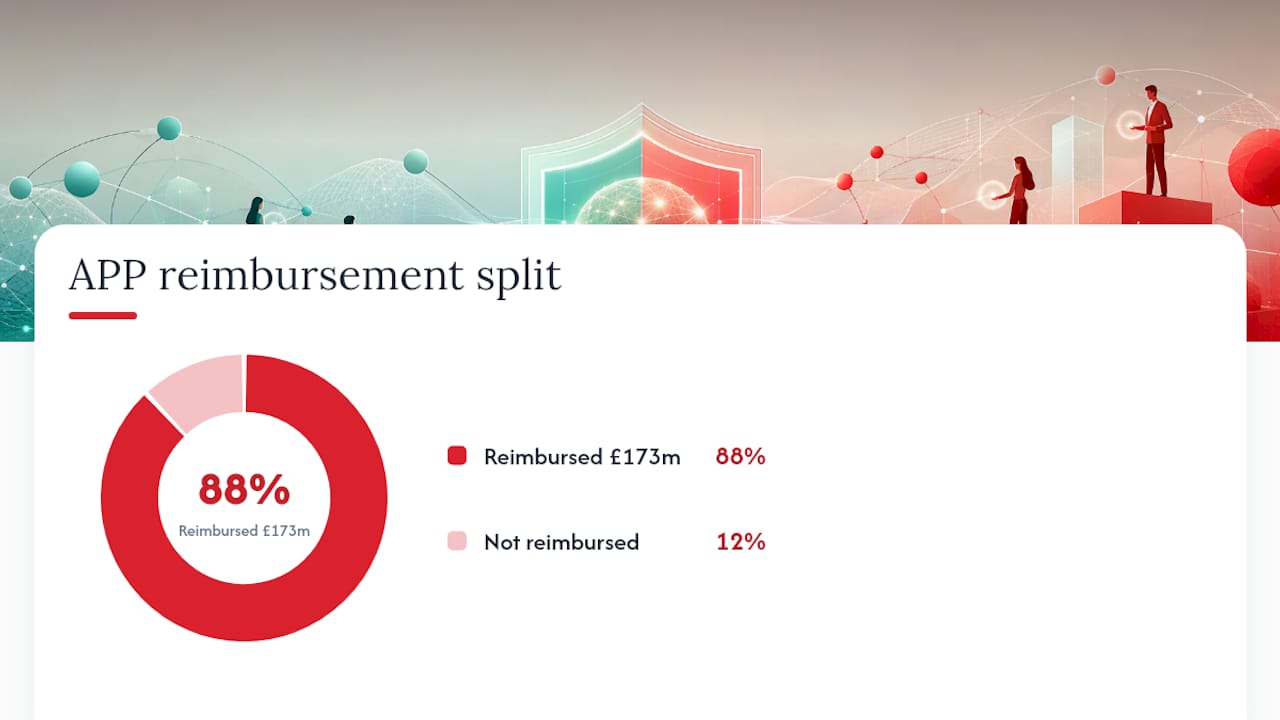
In the UK, mandatory APP reimbursement since October 2024 changed the incentive structure. In the scheme’s first year, 88% (£173 million) of in-scope APP losses were reimbursed, according to the UK Fraud Strategy 2026. That only works in your favor if your evidence trail is clean enough to support the claim.
Pro Tip: Build an incident response template before you need it. A fraud case at 2 a.m. during a jackpot spike is the worst time to figure out who to call first.
Measuring Whether Your Fraud Controls Are Working
You cannot manage what you do not measure, and fraud programs decay fast without regular review.
- Fraud loss rate: losses as a percentage of total processed volume.
- Chargeback rate: track separately from fraud loss since friendly fraud inflates it independently.
- False-positive rate: legitimate transactions wrongly declined; this is your conversion cost.
- Mean time to detect and respond: how fast you spot and act on suspicious activity.
- Exceptions per 10,000 transactions: flags a rules engine or model that has drifted out of tune.
Set thresholds that trigger automatic alerts rather than waiting for a monthly report. Given that reported UK fraud losses have climbed into the hundreds of millions in a single half-year, per the government’s 2026 strategy, waiting a full quarter to notice a spike is not a defensible cadence anymore. Review monthly with finance, ops, risk, and legal in the room together.
Where a Specialist Support Team Fits Into the Fraud Picture
KYC and payments handling do not run in a vacuum. They sit inside your day-to-day support operation, and that is exactly where a lot of fraud gets caught, or missed, first.
- Verification at the point of contact: agents trained to spot inconsistent ID documents or mismatched account details flag suspicious deposits before they clear.
- Escalation to payments ops: a clear handoff path means a flagged transaction reaches a decision-maker in minutes, not after the next shift change.
- 24/7 multilingual coverage: fraud does not pause for time zones, and neither should your KYC queue during a promo spike or a major sporting event.
- SLA-backed response times: written service levels keep flagged-case turnaround consistent even when ticket volume triples overnight.
This is the same operational layer Workanova’s KYC verification process and fintech support work covers for licensed operators managing payment risk at scale.
A Hands-On Checklist for Finance and Ops Leaders
If you take one thing from this article, make it this: fraud prevention fails most often on process, not technology. You can buy the best rules engine on the market and still lose money if nobody owns the escalation path.
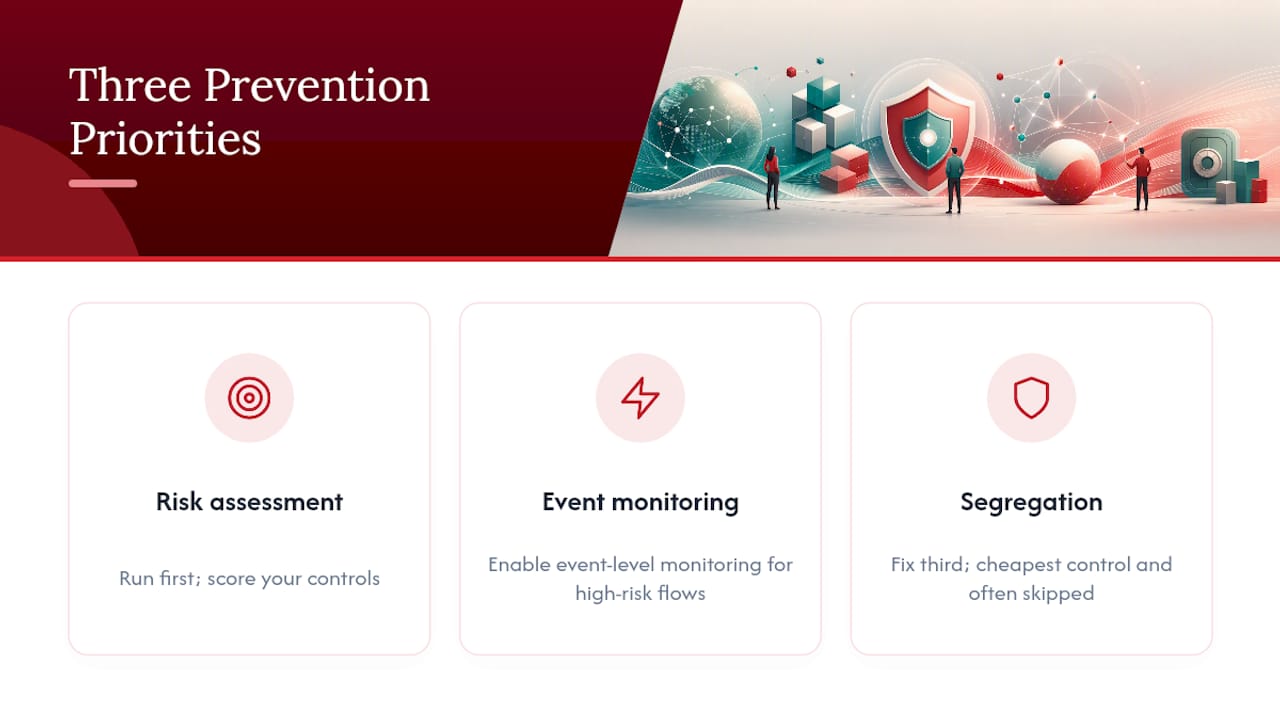
Three priorities come before anything else. Run the fraud risk assessment first, because you cannot prioritize controls you have not scored. Turn on event-level monitoring for your highest-risk flows second. Fix segregation of duties third, since it is the cheapest control on this list and the one most often skipped.
The most common mistake I see is buying detection tools without rebuilding the process around them. A great ML model paired with no manual review feedback loop just quietly drifts out of tune. A close second: ignoring the cost of false positives, which erodes revenue just as surely as fraud does.
If you are evaluating an outsourcing partner for KYC or payments handling, ask about SLA specifics, multilingual coverage hours, KYC escalation capability, and how long they retain case evidence. Vague answers on any of those four should end the conversation.
— Miroslav Maslovarić
How Workanova Strengthens Your Fraud Defense Line
A rules engine and a KYC policy document are only as strong as the team executing them at 3 a.m. during a promo spike or a World Cup weekend. Workanova builds and runs your own named player support team fully staffed for KYC checks, payments handling, and second-line escalation to your payments ops group, live in 4 to 8 weeks.

That means suspicious deposits get flagged by trained agents instead of sitting in a queue, escalations follow a written SLA instead of whoever happens to be online, and coverage holds steady across 24/7 shifts in 14+ languages instead of collapsing when ticket volume triples. For licensed operators in Malta, Cyprus, Gibraltar, the UK, the Isle of Man, Curaçao, DACH, and the Nordics, that consistency during peak events is often the difference between catching fraud early and writing it off. See how Workanova helps operators scale player support without hiring 50 agents and request a walkthrough of how a dedicated KYC and payments team would slot into your current stack.
Sources
- Fraud Risk Management Guide (COSO)
- Fraud strategy 2026 to 2029: disrupting crime, supporting economic resilience and delivering justice
- Fraud risk management: A framework for businesses | Stripe
- Payments Fraud | Detection and Mitigation Strategies
This article is general information, not a substitute for advice from a qualified financial advisor. Consult a qualified financial professional about your own circumstances before acting on anything here.
FAQ
What is payment fraud and how can it be prevented?
Payment fraud is any unauthorized or deceptive transaction designed to steal funds or goods, and it is best prevented through layered controls: preventive measures like authentication and verification, detective tools like monitoring and anomaly scoring, and a documented response plan for when fraud gets through.
How do I remove my name from SAFPS?
SAFPS (the Southern African Fraud Prevention Service) has its own formal removal or dispute process handled directly through the organization; if you believe you were listed in error, you need to contact SAFPS directly rather than your bank or merchant.
How do I block a company from taking payments from my account?
Contact your bank or card issuer directly to revoke a merchant’s continuous payment authority or cancel a recurring mandate, since merchants generally cannot be blocked without the account holder’s bank acting on the request.
What payment methods have fraud protection?
Credit cards typically carry the strongest built-in chargeback protections, while bank transfers and APP payments have historically offered less recourse, though the UK’s mandatory APP reimbursement rules introduced since October 2024 have significantly closed that gap for many in-scope cases.
How does outsourcing KYC and payments handling reduce fraud risk?
A specialist team with written SLAs and dedicated escalation paths can flag suspicious deposits and verification mismatches faster than a stretched in-house team, particularly during high-volume periods when internal staff cannot scale up in time.
Recommended
- Support Outsourcing Financial Case: CFOs
- Fintech Customer Support BPO Outsourcing
- SLA Credits and Loan Penalties: What Every Contract Hides
Write your worst support ticket on our wall — best one wins a free month. Book a meeting